Church of St. Michael,
Cathedine
Grade II listed
The Church closed in 2010 and is now in private ownership. Public access
is only permitted to areas of the churchyard which have been used for
burials. Parking is extremely difficult.
Photographs of the interior as it was in 2010 are available in our photo gallery, please use the Photo Gallery link at the top of this page
St
Michael's church at Cathedine occupies a rectangular churchyard on a
hill slope at the southern end of Llangors Lake, some 11km to the east
of Brecon.
The church was
almost entirely rebuilt in the second half of the nineteenth century,
but some stonework from the earlier structure may survive and the west
wall and the jambs of the south door could be from its predecessor.
Its only medieval furnishing was a plain font.
The
origin of the church is not known.
The Episcopal Register of St David’s lists it as 'Blaneueny' in
1401, while the Valor Ecclesiasticus refers to 'Kethoddyn' in 1535.
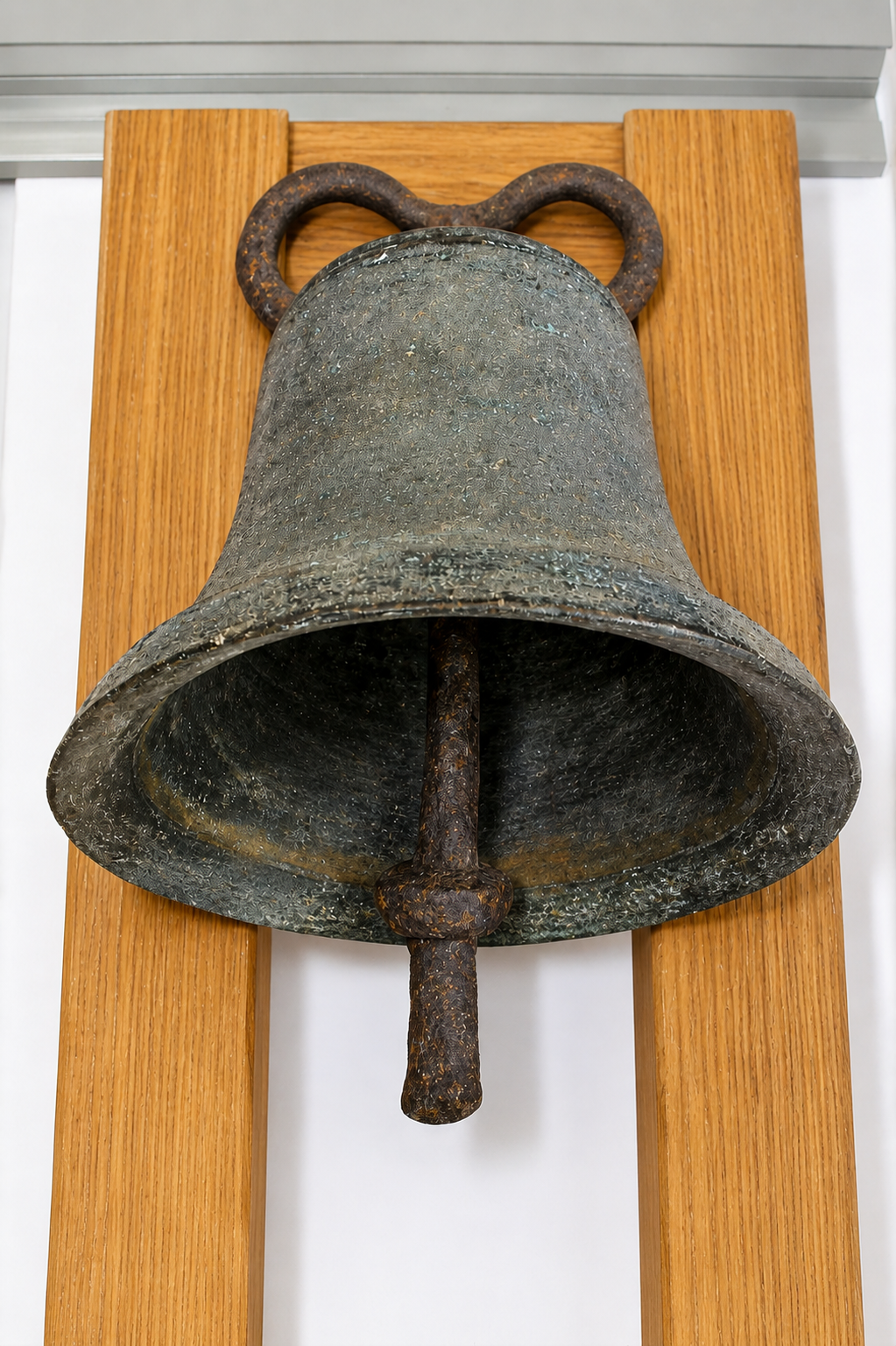 In
circa 1810 the church consisted of a nave and chancel, and an unroofed
"tower" to the west containing three bell.
The windows were narrow elongated
squares; the floor was indifferently flagged and on the north side was a
structure called "the old chapel" which was used as a lumber room.
In
circa 1810 the church consisted of a nave and chancel, and an unroofed
"tower" to the west containing three bell.
The windows were narrow elongated
squares; the floor was indifferently flagged and on the north side was a
structure called "the old chapel" which was used as a lumber room.
In
1855 it was noted: "kind of tower at the west end, not rising higher
than the nave", and having a saddle roof.
Close to the west end of the nave a chapel had been added at
right-angles.
The building
had been whitewashed externally.
The east window had two lights and was poor Perpendicular, there
was only one window in the north wall, and three of doubtful integrity
on the south.
The churchyard
contained some fine yews.
In 1868 the north tower with steep, slated
pyramidal roof and a new chancel were erected by E H Martineau.
The nave was largely rebuilt by S
W Williams in 1894 in Early English style.
The specification for this second phase of work required the old
loft to be taken down at the west end, the old walls of the nave,
transept and porch to be demolished, small lancet windows to be removed,
rainwater drains to be dug to a depth of 2', a heating chamber to be
excavated and tiled floors to be laid.
Interior fittings included a plain, circular
thirteenth-century font – its only original medieval furnishing.
It would have been rung as a coffin was carried to the
church. The custom died out in the 19th cnetury and was replaced by the
tolling bell, usuall the tenore bell
Stained Glass Works at Church of St Michael, Cathedine, Brecknockshire in Stained Glass in Wales
Christ the Good Shepherd
-
east wall of the chancel -
about 1868
Mainly decorative three-light window, with the figure of Christ as the
Good Shepherd at the centre.
An
angel above holding a text.
Cadw listing quotes:
stained glass
E window to Gwynne Holford of Buckland 1859, important local landowning
family
Christ with Children
-
south wall of the sanctuary
studio: Mayer & Co.
I Will Give You Rest
-
north wall of the nave
Single-light window with seated figure of Christ in
a landscape
The Ascension
-
west wall of the nave
Single-light window
The window was considerably obscured by the growth
of ivy on the exterior of the church by 2009.
Behold I Stand at the Door and Knock
-
south wall of the
chancel - about 1864
studio: Lavers & Barraud
Single-light window.
Interpretation of the scene of William Holman Hunt's Light of
the World, with Christ holding a lantern and knocking at a door.
The design is attributed to John
Milner Allen by William Waters.
Inscription: 'In Memoriam ‘C M D'.
I Ascend unto my Father
-
north wall of the sanctuary
Single-light window with standing figure of the
Risen Christ in a landscape, pointing upwards, with text below, from his
encounter with Mary Magdalene after his resurrection.
Given in memory of Jonathan, Amy, Mervyn and
Blanche Marsden Jones.
Churchyard
Cathedine churchyard is set on a west facing slope with the church
building itself terraced deeply into the slope.
Monuments are spread throughout much of the yard except on an
area on the north; graves are quite tightly packed on the south while
twentieth century ones are concentrated on the north.
Later eighteenth century gravestones have been cleared and now
lean against the north wall of the nave, and there are other possible
examples in a comparable position against the south wall.
An old stone stile in the west
boundary wall leads north to a footpath across fields to the road across
the common.
There are ancient yews on the south edge of the churchyard, the central
one badly shattered; otherwise there are mature pines and other trees.
There are three grade II listed monuments commemorating Vaughan, Gunter and Shortreed.
Vaughan monument
-
south side of church, south east of nave
Those commemorated are Ann wife of Thomas Vaughan
died 1818, Thomas Vaughan died 1829, Margaret sister of Thomas Vaughan
died 1829, Mary daughter of Thomas Vaughan died 1853, Elizabeth daughter
died 1860, Anne daughter died 1874 and Margaret daughter died 1870. The
Vaughan family came from Tretower and at one time owned Cathedine Fawr.
A tall square pillar of ashlar, slightly splayed to
base, with very heavy tiered cornice surmounted by an urn, standing on a
moulded stone plinth, within a rectangular enclosure of metal railings
with spear finials; inscriptions on all four sides, the earliest to
south.
Gunter
-
near south east corner of church
Two monuments to Gunter family commemorate William
Gunter died 1848, also Catherine his wife died 1889 and son James died
1829, Thomas Gunter son of William and Catherine died 1866, all of
Cathedine Fawr.
A pair of monuments within an enclosure of
hexagonal iron railings; monument to north to Thomas Gunter is a plain
obelisk with inscription at base; monument to south is a plain chest
tomb on metal feet with primary inscription on south side.
Shortreed
-
south west of church near boundary
Monument to Margaret Shortreed died 1851 husband of
David Brown of Roxburgh and son Patrick died 1859 at Coedycymmer.
A tall square sandstone pier on a deep stepped
plinth; entablature with decorative frieze surmounted by a tall draped
urn; inscriptions on north and west faces.
The monument stands in a tall enclosure of slender iron railings
in two tiers with spear finials, urns to corner stanchions.
South Wales
Borderers Died 28 February 1943, 32 years old
Son of Charles Rees Davies
and Sarah Ann Davies, of Cathedine; husband of Rosemary Davies. of
Talybont-on-Usk. Personal Inscription HEARTS THAT LOVE YOU NEVER FORGET YOU
Fifth son of the late Patrick and Mary Helen Catherine Dormond born in Partick,
Glasgow; married to Jessie Margaret Munro in 1911, of Bwlch, Breconshire. M.P.
for Llandaff and Barry since 1931
Sources:
R Scourfield & R Haslam Buildings
of Wales: Powys (2013)
Church Heritage Cymru
in association with Tina
Andrew, Heritage Officer, Church in Wales
Photos 2010 by Clee
Tompkinson Francis, Brecon used by kind permission